abstract painting

Mobile App / IOS Native Components

Therapy App: Improving Retention, Activationand CRO

Tools: Figma, FigJam, Miro, Zoom, UX Pilot, ChatGPT

My Role: Product Designer

Problem:

First things first: we are converting people that aren’t feeling well. Overdoing it with triggers or too much information, asking sensitive information, too much choice — those are some of the pain points that came up during the user interviews. Let me walk you through the others below.

Disclaimer:

I’m in the middle of user testing for the main flows of the app to find any and solve all the usability issues that will come up. So the screens presented in this version of case study are not tested on users yet.

Solution:

Focus on increasing LTV and user retention, users completion the onboarding and get to AHA-moments ASAP, high conversionsReferral and Loyalty program to overcome the e-commerce domain

Results:

  • Increased LTV and user retention by optimizing user journeys and removing friction across key touchpoints.
  • Accelerated onboarding completion and AHA-moments through a simplified, guidance-driven onboarding flow.
  • Drove higher conversions by rethinking Referral and Loyalty programs to fit a service-based therapy platform, aligning e-commerce growth tactics with SaaS monetization models.

Defining the Problem

Competitors Lack Credible Scientific Communication

  1. Stigma, lack of confidence and concentration, “therapy is expensive”, felling wrong about feeling bad are the main pain points

Right after the competitor’s research I’ve held 5 user interviews to find out the common pain points user face with booking a therapy session in general, and using existing market offers in particular.

  1. Users feel exhausted and stuck after onboarding

4/5 users Users were delaying booking a session not because they lacked motivation, but because the onboarding flow was cognitively exhausting. By the time they received their therapist matches, many experienced choice paralysis and postponed taking action, despite already recognizing the need for therapy.

  1. Rigid Pricing & Package Friction

The requirement to purchase session packages caused some users to leave the platform and seek therapists elsewhere, especially when they only needed one session. This showed a mismatch between business goals and user expectations.
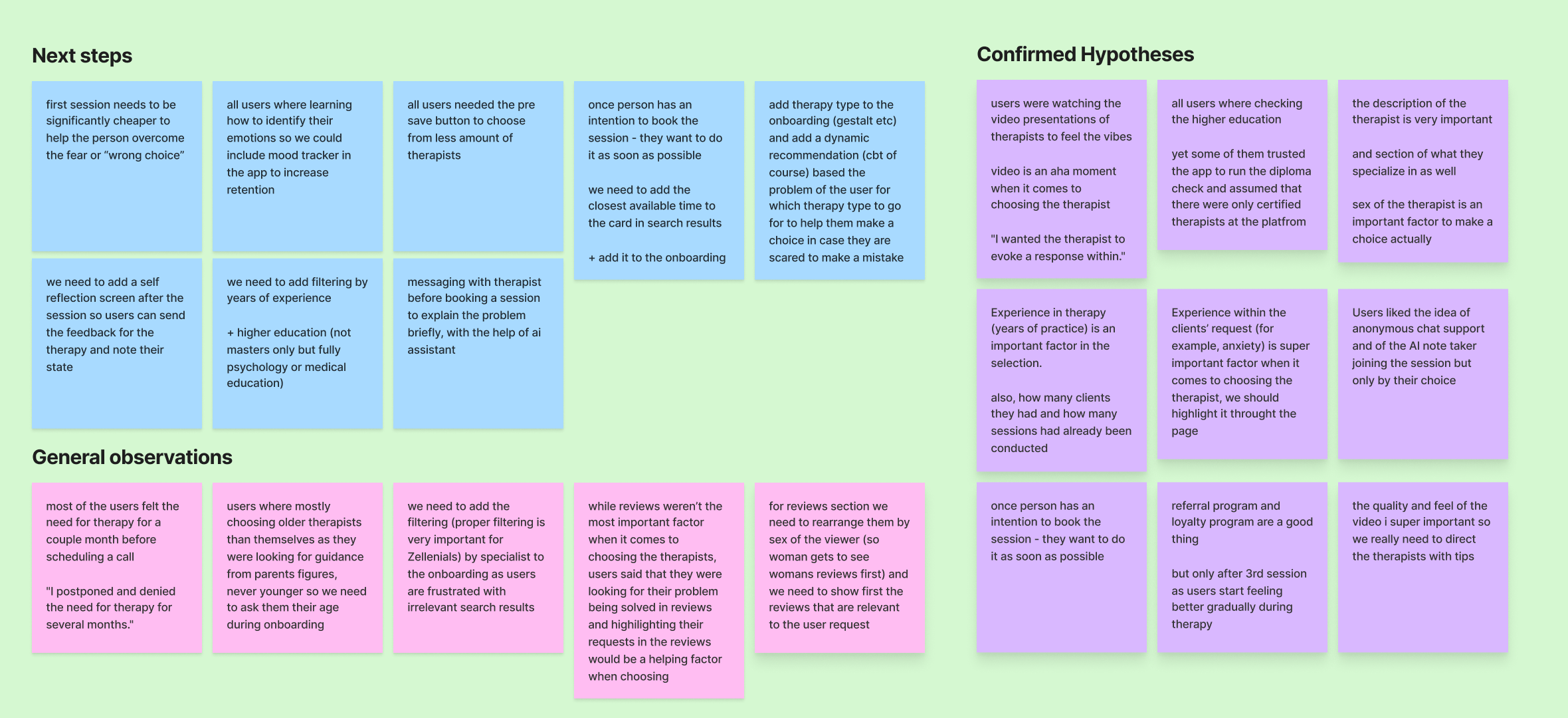
Fatigue and Mood Dips Are the Toughest Pain Points

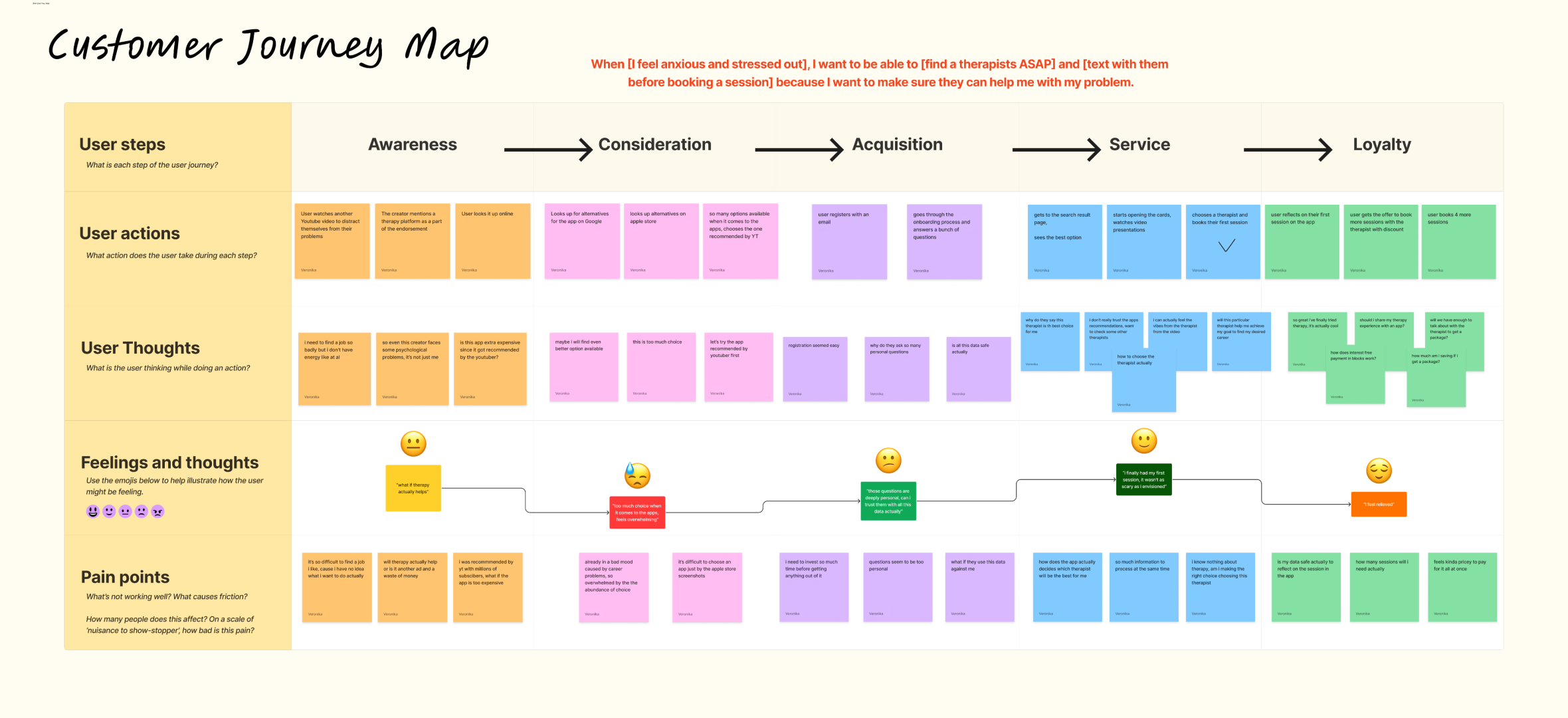
I think I still want to remind that the users we are dealing with are very sensitive and in a dark kinda place. When conducting user interviews I talked a lot about their experience and emotional state along the booking journey. On the image below you can see Figjam stickers that I’ve categorized, based on the insights received:
"I just needed someone to tell me that I was okay. That I wasn't losing my mind. That everything was fine, that this happens. And that there are specialists that can help you”
User persona & CJM:

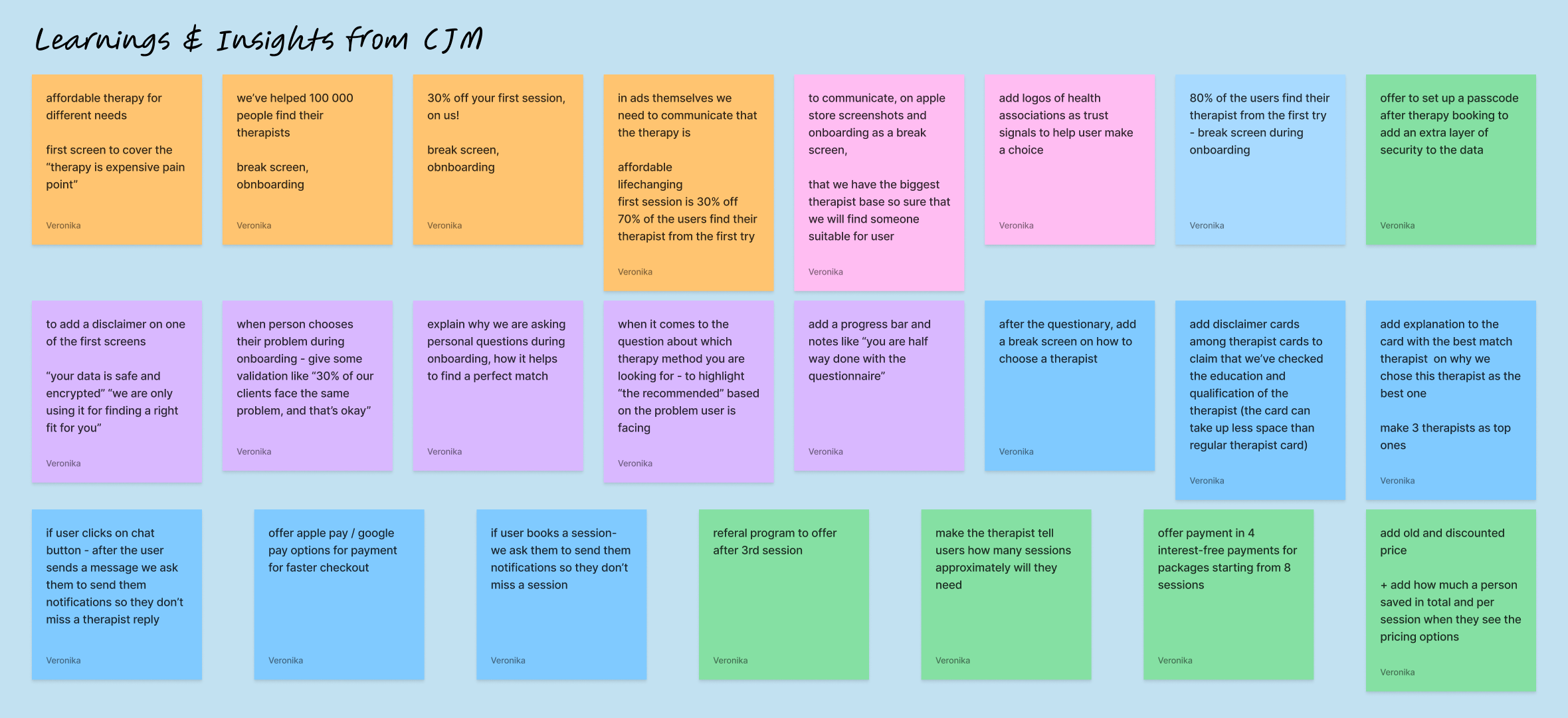
  1. Emotional Safety as the Core Value

Julia is primarily seeking emotional safety, validation, and reassurance rather than just functional therapy features. She wants to feel understood, supported, and confident that she’s not “broken.” The product should therefore feel like a calm, guiding companion, not a cold marketplace.

  1. Curated Guidance Over Endless Choice

Too many options overwhelm Julia and slow her decision-making. She doesn’t want endless browsing — she wants a small, well-curated set of relevant matches she can trust. Reducing cognitive load is key to helping her move forward.

3. Trust Is Built Through Human Signals

Julia judges therapists largely through human and emotional cues, not credentials alone. Video presence, authority, and relatability strongly influence her sense of trust. The experience should highlight therapist vibe and communication style early and clearly.

MVP

Validation and gentle pain points covery

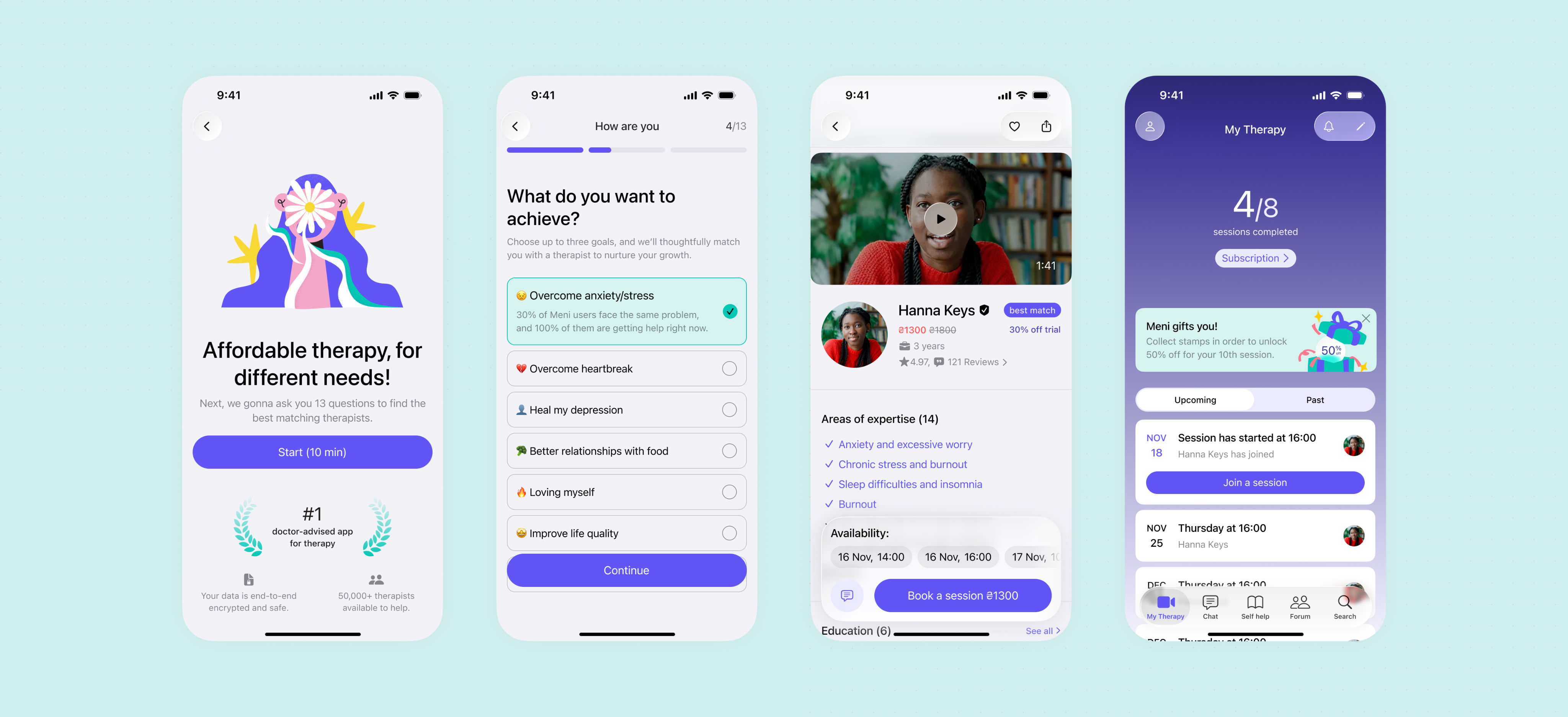
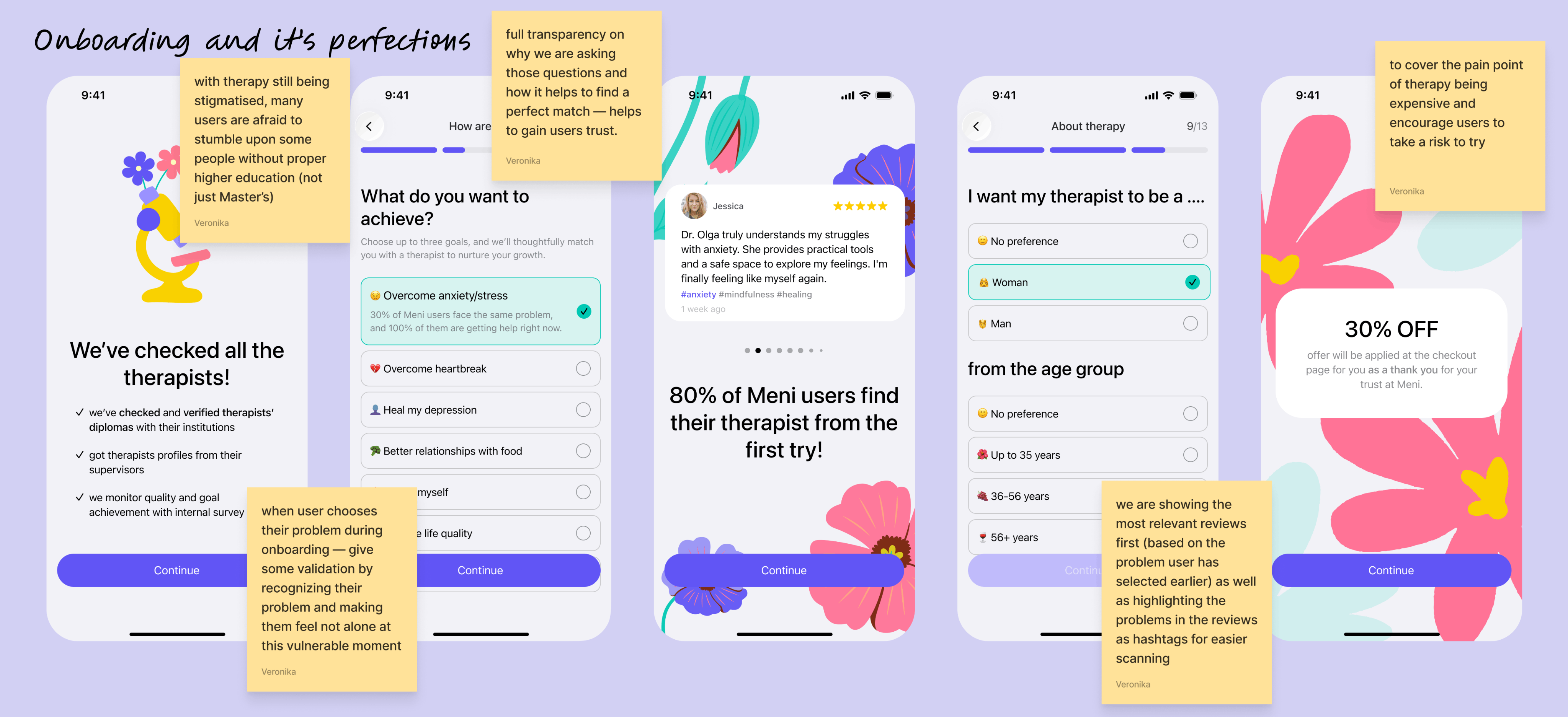
Below you can see the core screens and Booking flow with lots of insights implemented from the UX research on the actual frames.

Search Screen with insights translated into frames

Therapist card made with lots of white space, button hierarchy in place and supportive, “growing” branding coming through app’s copy and visual language

JTBD: When [I feel anxious and stressed out], I want to be able to [find a therapists ASAP] and [text with them before booking a session] because I want to make sure they can help me with my problem.

North Star of Meni

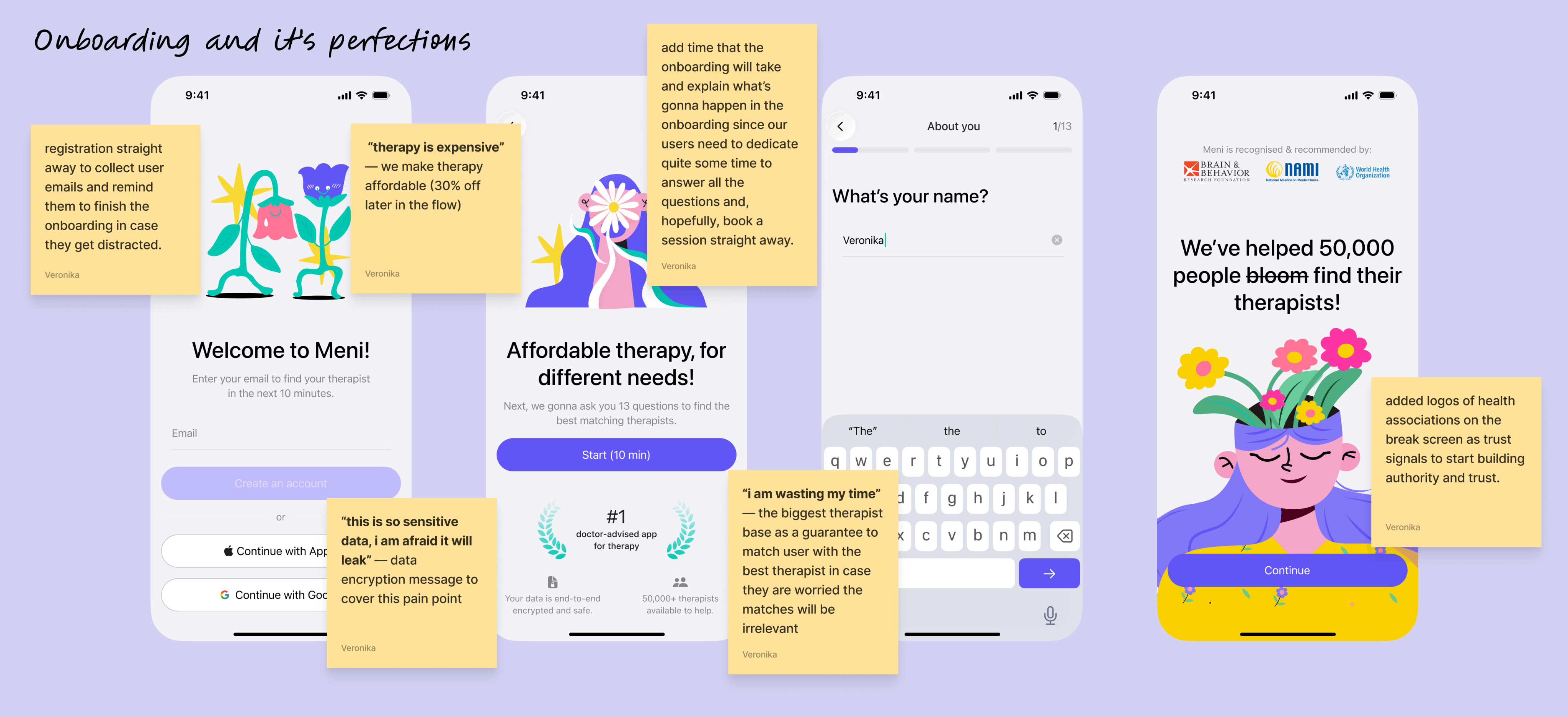
When working on the user persona and CJMs I was focusing a lot on North Star metric of Meni: successful onboarding, booking a session and finishing the first therapy session. Therefore, below you will see more of other flows related to optimization for conversion.

JTBD: Easily [join the session] and [get the much needed support].

Development

In order to fasten the development speed, we’ve used native IOS components and color pallete.

Increasing Retention, LTV

Referral Program to maximise the user acquisition cost

We all want something legit and tested by our friends when it comes to trying new things. Therefore, Referral Program is a great thing to introduce for Meni after 3rd session to maximise the LTV and user acquisition costs,

Loyalty Program as the main fuel for organic LTV growth

Note that the color of the CTA button for Buying more sessions is brighter when it comes closer to the end lof the user’s package.

Thank you for staying!

User Testing Insights Coming Soon!

Mobile App

Therapy App for Therapists and Their Clients

Coming Soon

Mobile, Web / for Car Repair Shops & Car Owners

How a Clear Design System Cut 2 Weeks off Development Time: Car Repair CRM

Coming Soon

magazine spread
abstract painting

Mobile App / IOS Native Components

Therapy App: Improving Retention, Activation and CRO

Tools: Figma, FigJam, Miro, Zoom, UX Pilot, ChatGPT

My Role: Product Designer

Problem:

First things first: we are converting people that aren’t feeling well. Overdoing it with triggers or too much information, asking sensitive information, too much choice — those are some of the pain points that came up during the user interviews. Let me walk you through the others below.

Disclaimer:

I’m in the middle of user testing for the main flows of the app to find any and solve all the usability issues that will come up. So the screens presented in this version of case study are not tested on users yet.

Solution:

Focus on increasing LTV and user retention, users completion the onboarding and get to AHA-moments ASAP, high conversionsReferral and Loyalty program to overcome the e-commerce domain

Results:

  • Increased LTV and user retention by optimizing user journeys and removing friction across key touchpoints.
  • Accelerated onboarding completion and AHA-moments through a simplified, guidance-driven onboarding flow.
  • Drove higher conversions by rethinking Referral and Loyalty programs to fit a service-based therapy platform, aligning e-commerce growth tactics with SaaS monetization models.

Defining the Problem

Competitors Lack Credible Scientific Communication

  1. Stigma, lack of confidence and concentration, “therapy is expensive”, felling wrong about feeling bad are the main pain points

Right after the competitor’s research I’ve held 5 user interviews to find out the common pain points user face with booking a therapy session in general, and using existing market offers in particular.

  1. Users feel exhausted and stuck after onboarding

4/5 users Users were delaying booking a session not because they lacked motivation, but because the onboarding flow was cognitively exhausting. By the time they received their therapist matches, many experienced choice paralysis and postponed taking action, despite already recognizing the need for therapy.

  1. Rigid Pricing & Package Friction

The requirement to purchase session packages caused some users to leave the platform and seek therapists elsewhere, especially when they only needed one session. This showed a mismatch between business goals and user expectations.

Fatigue and Mood Dips Are the Toughest Pain Points

I think I still want to remind that the users we are dealing with are very sensitive and in a dark kinda place. When conducting user interviews I talked a lot about their experience and emotional state along the booking journey. On the image below you can see Figjam stickers that I’ve categorized, based on the insights received:

"I just needed someone to tell me that I was okay. That I wasn't losing my mind. That everything was fine, that this happens. And that there are specialists that can help you”

User persona & CJM:

  1. Emotional Safety as the Core Value

Julia is primarily seeking emotional safety, validation, and reassurance rather than just functional therapy features. She wants to feel understood, supported, and confident that she’s not “broken.” The product should therefore feel like a calm, guiding companion, not a cold marketplace.

  1. Curated Guidance Over Endless Choice

Too many options overwhelm Julia and slow her decision-making. She doesn’t want endless browsing — she wants a small, well-curated set of relevant matches she can trust. Reducing cognitive load is key to helping her move forward.

3. Trust Is Built Through Human Signals

Julia judges therapists largely through human and emotional cues, not credentials alone. Video presence, authority, and relatability strongly influence her sense of trust. The experience should highlight therapist vibe and communication style early and clearly.
MVP

Validation and gentle pain points covery

Below you can see the core screens and Booking flow with lots of insights implemented from the UX research on the actual frames.
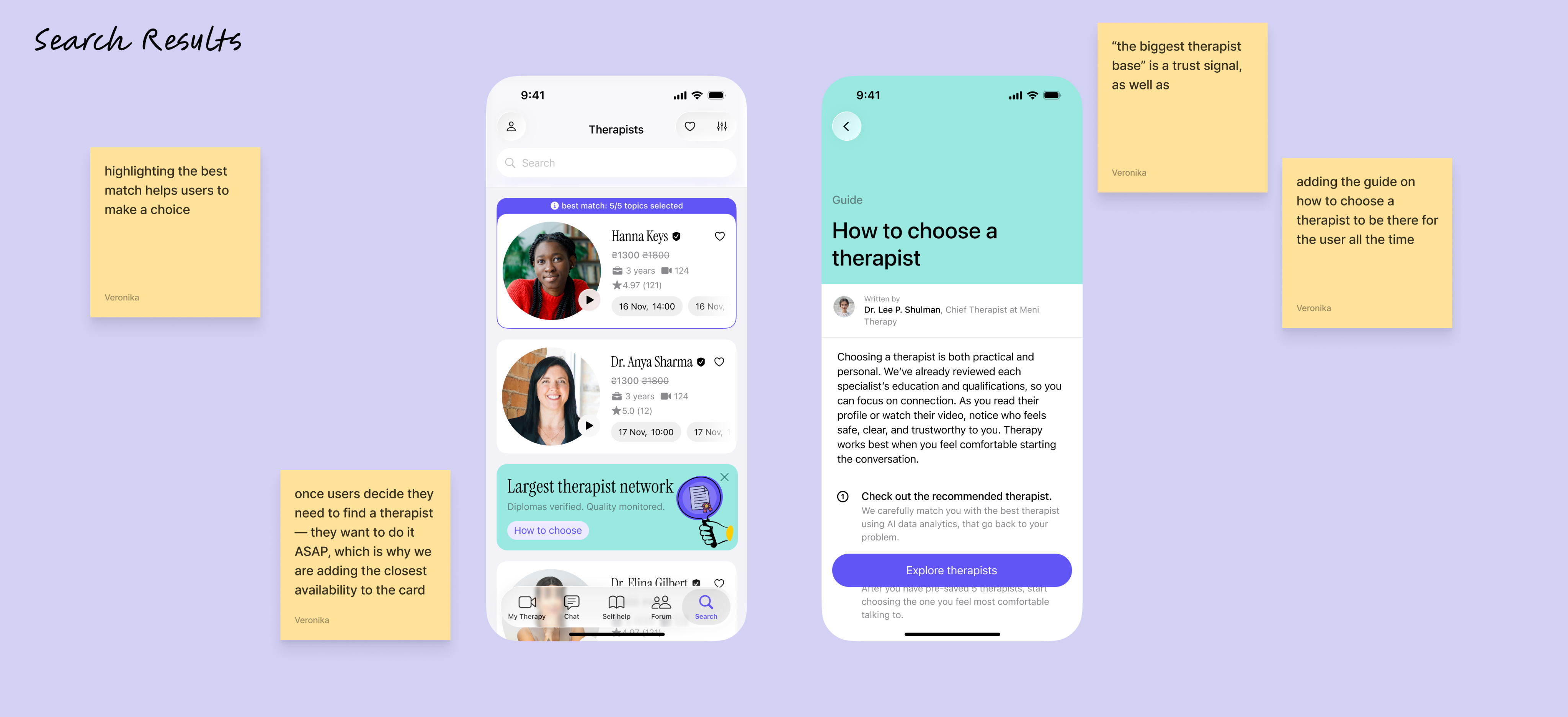
Search Screen with insights translated into frames
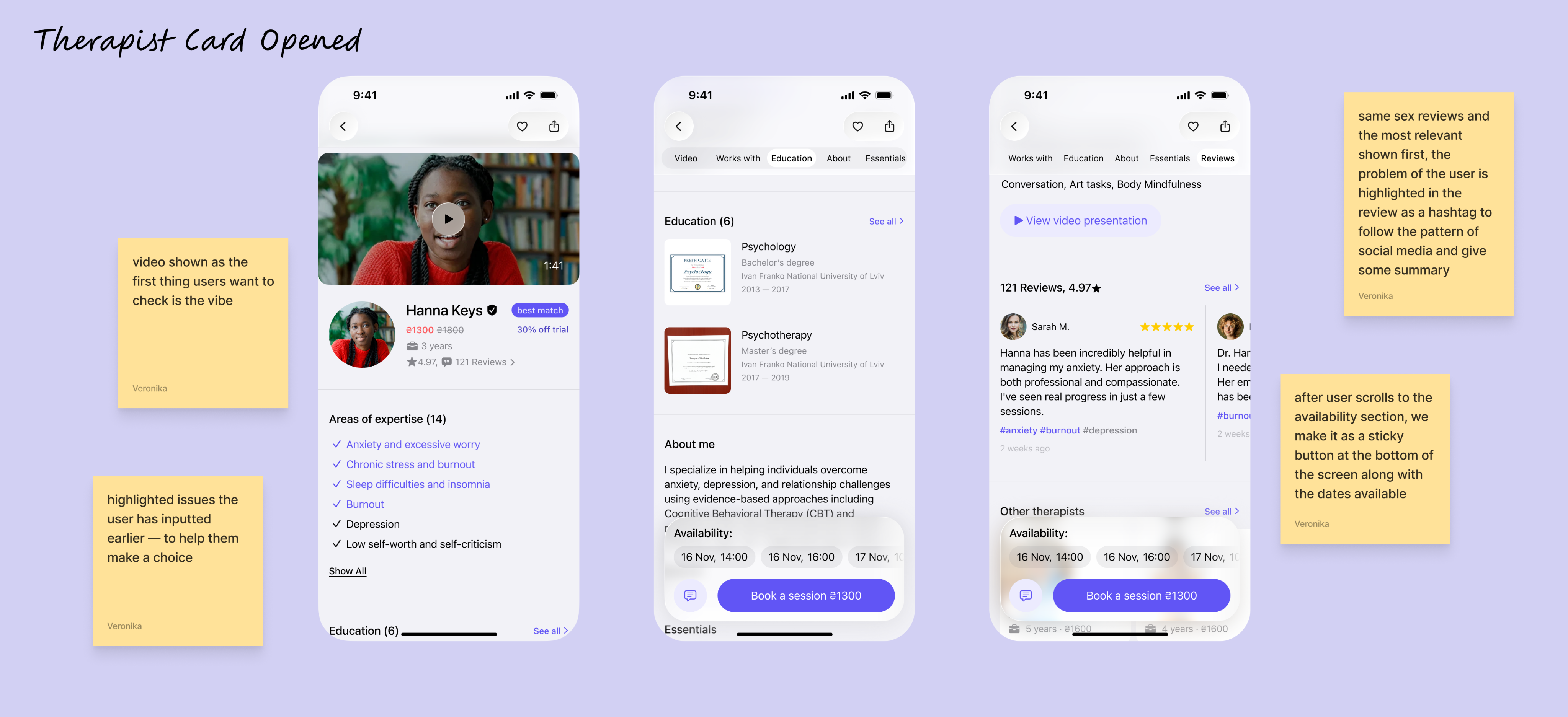
Therapist card made with lots of white space, button hierarchy in place and supportive, “growing” branding coming through app’s copy and visual language
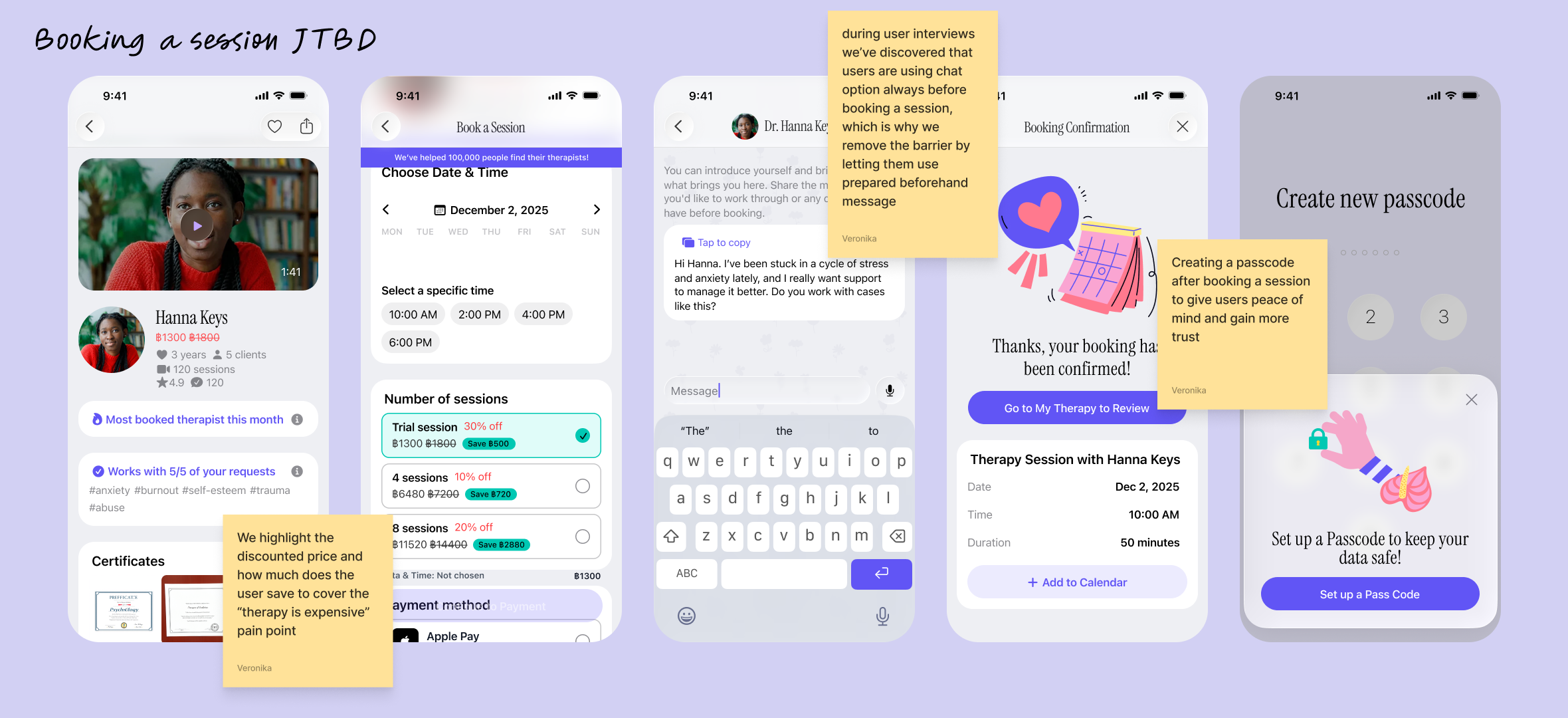
JTBD: When [I feel anxious and stressed out], I want to be able to [find a therapists ASAP] and [text with them before booking a session] because I want to make sure they can help me with my problem.

North Star of Meni

When working on the user persona and CJMs I was focusing a lot on North Star metric of Meni: successful onboarding, booking a session and finishing the first therapy session. Therefore, below you will see more of other flows related to optimization for conversion.
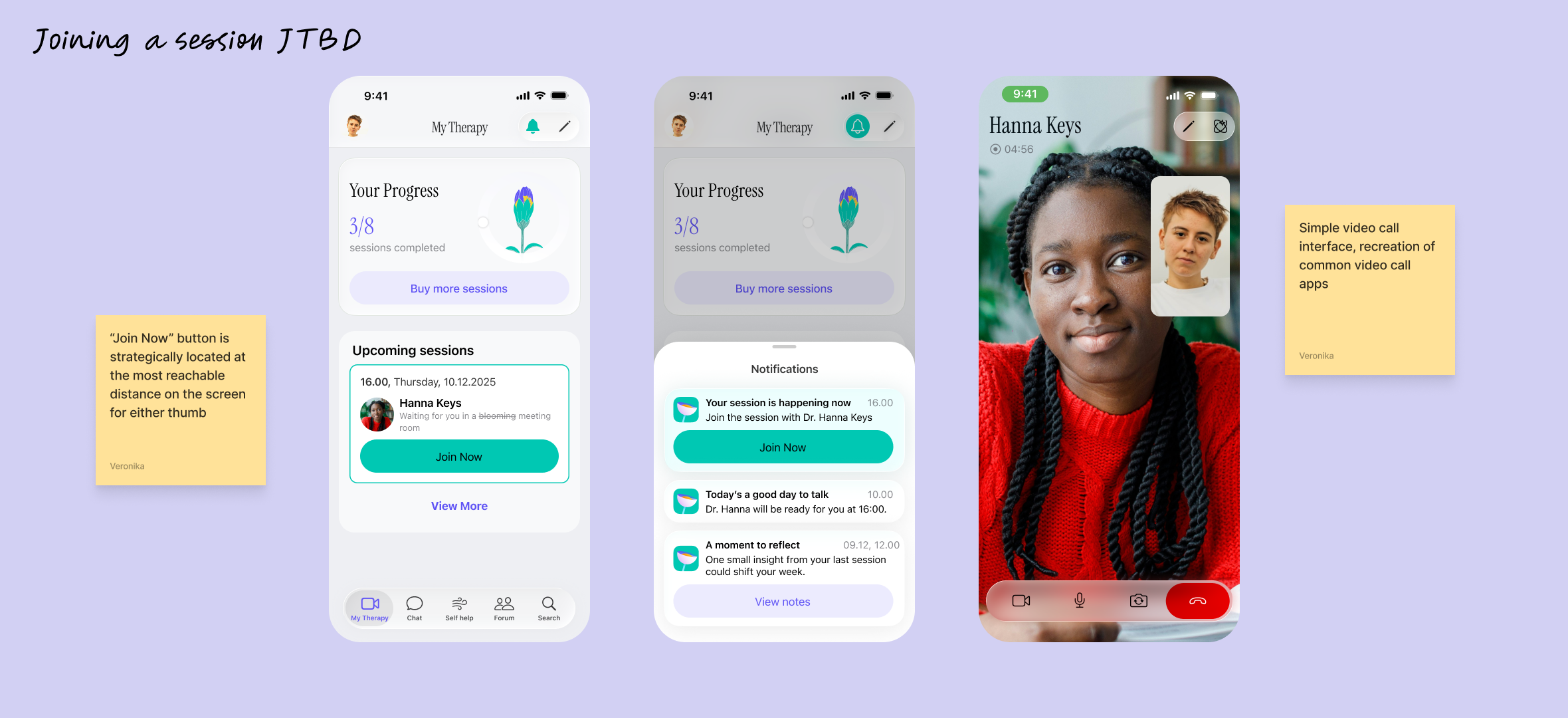
JTBD: Easily [join the session] and [get the much needed support].
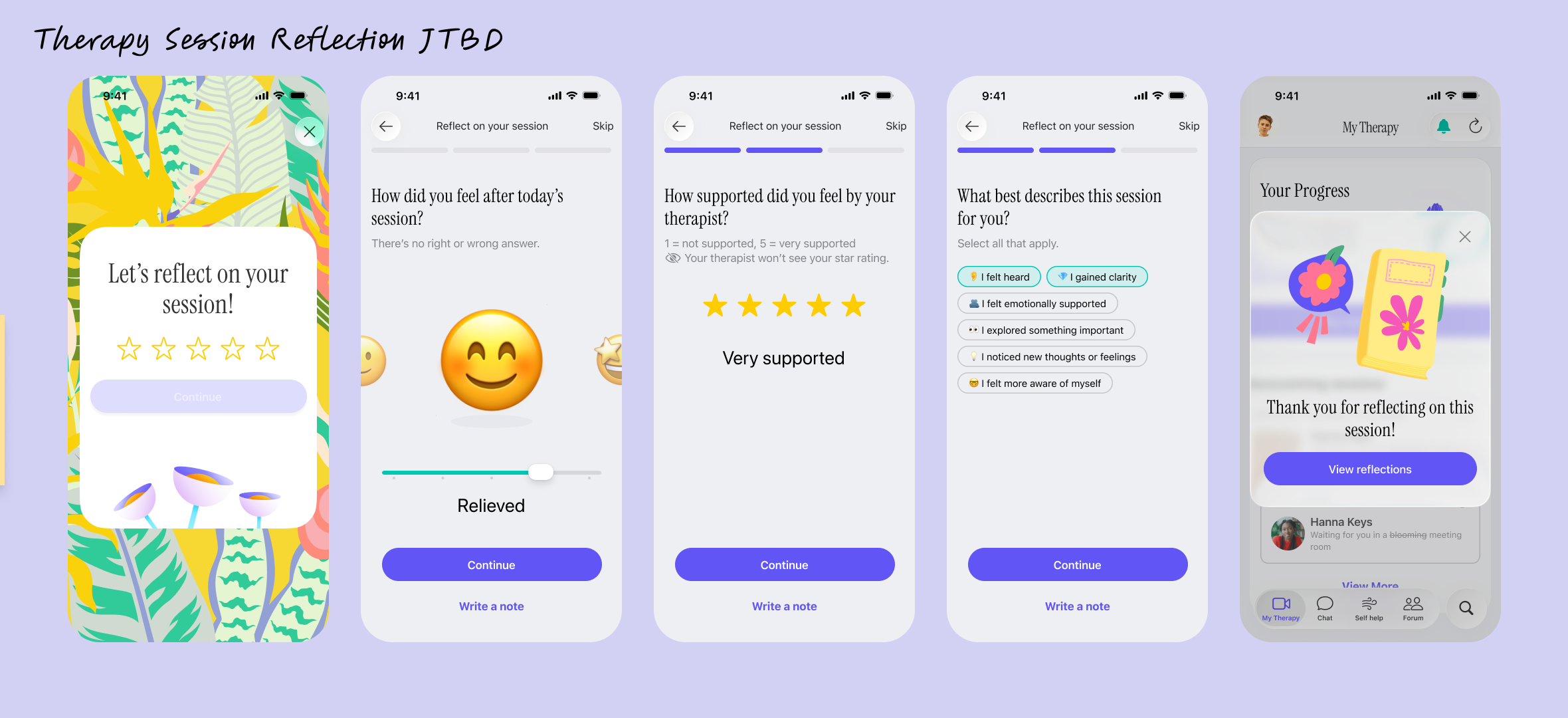
Development

In order to fasten the development speed, we’ve used native IOS components and color pallete.

Increasing Retention, LTV

Referral Program to maximise the user acquisition cost

We all want something legit and tested by our friends when it comes to trying new things. Therefore, Referral Program is a great thing to introduce for Meni after 3rd session to maximise the LTV and user acquisition costs,
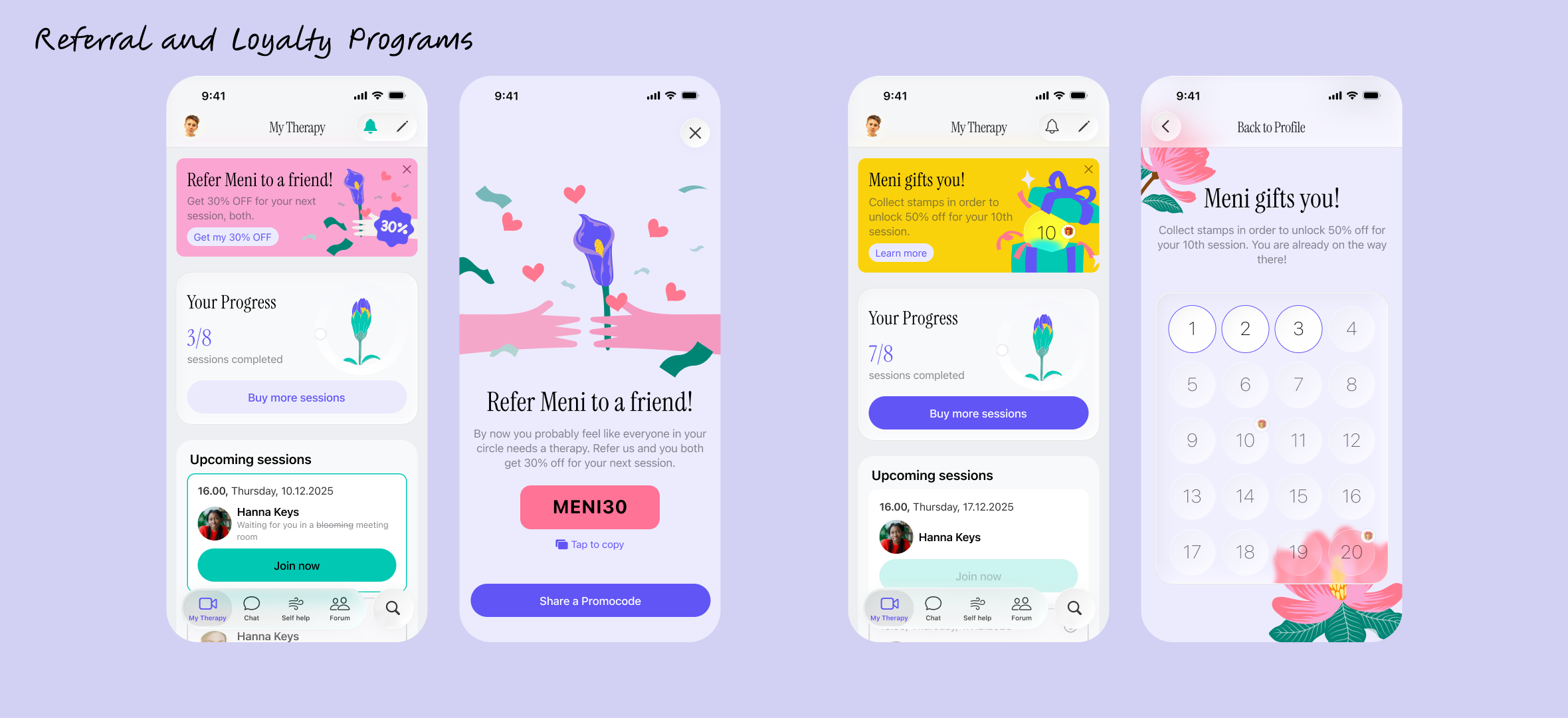
Loyalty Program as the main fuel for organic LTV growth

Note that the color of the CTA button for Buying more sessions is brighter when it comes closer to the end lof the user’s package.

Thank you for staying!

User Testing Insights Coming Soon!
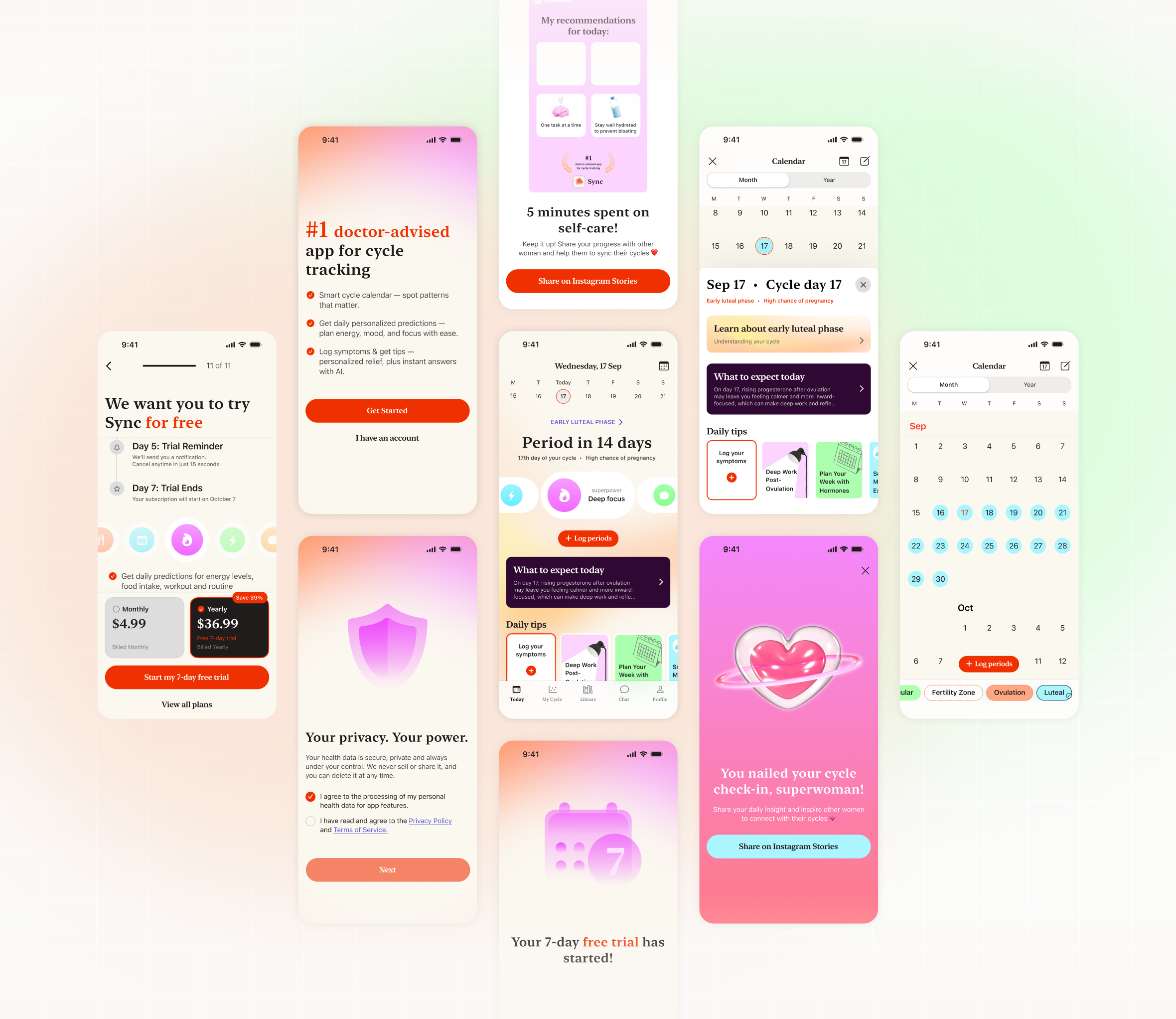
Mobile App

Therapy App for Therapists and Their Clients

Coming Soon

abstract painting

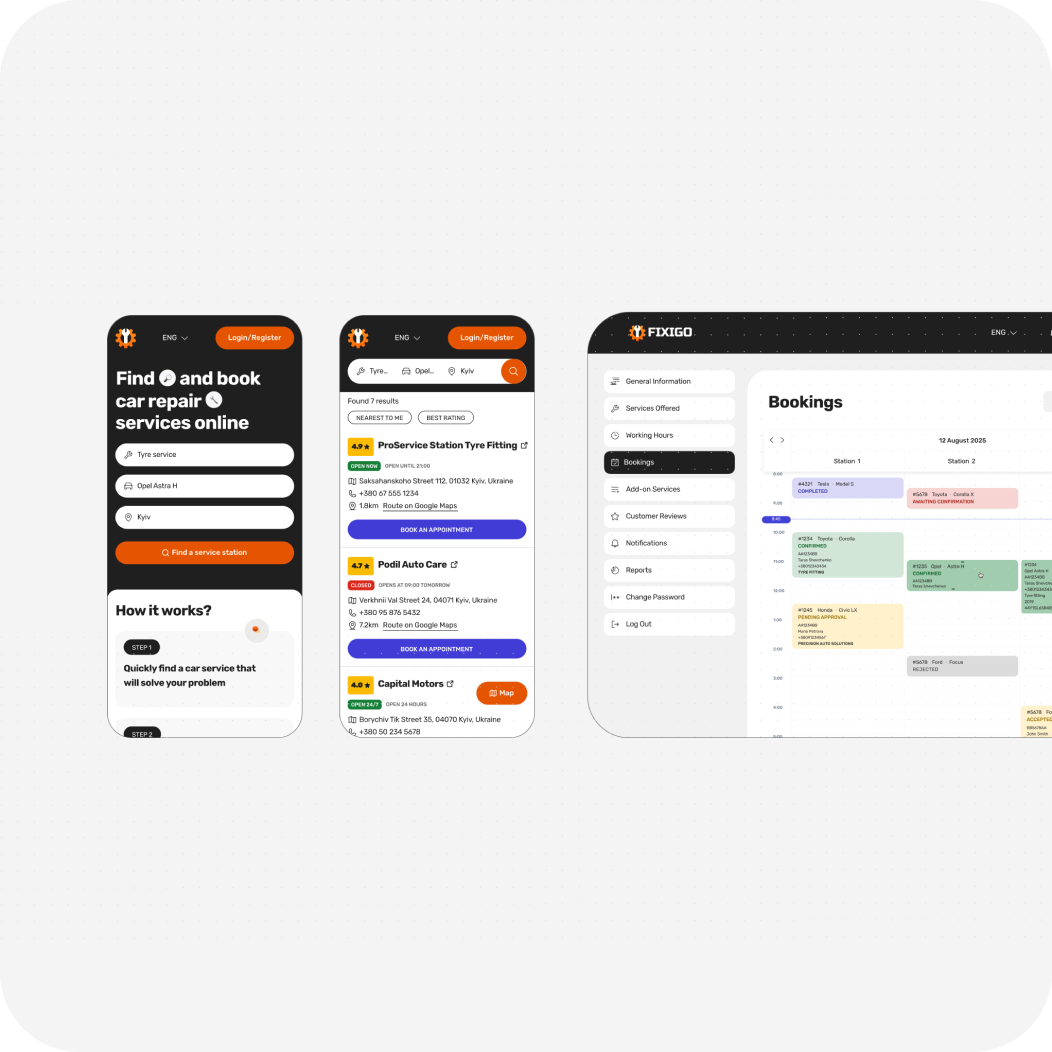
Mobile, Web / for Car Repair Shops & Car Owners

How a Clear Design System Cut 2 Weeks off Development Time: Car Repair CRM

Coming Soon
magazine spread

Mobile App / IOS Native Components

Therapy App: Improving Retention, Activation and CRO

Tools: Figma, FigJam, Miro, Zoom, UX Pilot, ChatGPT

My Role: Product Designer

Problem:

First things first: we are converting people that aren’t feeling well. Overdoing it with triggers or too much information, asking sensitive information, too much choice — those are some of the pain points that came up during the user interviews. Let me walk you through the others below.

Disclaimer:

I’m in the middle of user testing for the main flows of the app to find any and solve all the usability issues that will come up. So the screens presented in this version of case study are not tested on users yet.

Solution:

My main focus was on increasing onboarding completion rates and Activation rate, and, obviously, increasing conversion rate. Introduced Referral and Loyalty program to increase the LTV. The North star metric for Meni lies in users converting into customers and booking and successfully finishing a therapy sessions.

Results:

  • Accelerated onboarding completion and AHA-moments through a simplified, guidance-driven onboarding flow.
  • Increased LTV and user retention by optimizing user journeys and removing friction across key touchpoints.
  • Drove higher conversions by rethinking Referral and Loyalty programs to fit a service-based therapy platform, aligning e-commerce growth tactics with SaaS monetization models.

Defining the Problem

Competitors Lack Credible Scientific Communication

  1. Stigma, lack of confidence and concentration, “therapy is expensive”, felling wrong about feeling bad are the main pain points

Right after the competitor’s research I’ve held 5 user interviews to find out the common pain points user face with booking a therapy session in general, and using existing market offers in particular.

  1. Users feel exhausted and stuck after onboarding

4/5 users Users were delaying booking a session not because they lacked motivation, but because the onboarding flow was cognitively exhausting. By the time they received their therapist matches, many experienced choice paralysis and postponed taking action, despite already recognizing the need for therapy.

  1. Rigid Pricing & Package Friction

The requirement to purchase session packages caused some users to leave the platform and seek therapists elsewhere, especially when they only needed one session. This showed a mismatch between business goals and user expectations.

Fatigue and Mood Dips Are the Toughest Pain Points

I think I still want to remind that the users we are dealing with are very sensitive and in a dark kinda place. When conducting user interviews I talked a lot about their experience and emotional state along the booking journey. On the image below you can see Figjam stickers that I’ve categorized, based on the insights received:

"I just needed someone to tell me that I was okay. That I wasn't losing my mind. That everything was fine, that this happens. And that there are specialists that can help you”

User persona & CJM:

  1. Emotional Safety as the Core Value

Julia is primarily seeking emotional safety, validation, and reassurance rather than just functional therapy features. She wants to feel understood, supported, and confident that she’s not “broken.” The product should therefore feel like a calm, guiding companion, not a cold marketplace.

  1. Curated Guidance Over Endless Choice

Too many options overwhelm Julia and slow her decision-making. She doesn’t want endless browsing — she wants a small, well-curated set of relevant matches she can trust. Reducing cognitive load is key to helping her move forward.

3. Trust Is Built Through Human Signals

Julia judges therapists largely through human and emotional cues, not credentials alone. Video presence, authority, and relatability strongly influence her sense of trust. The experience should highlight therapist vibe and communication style early and clearly.

MVP

Validation and gentle pain points covery

Below you can see the core screens and Booking flow with lots of insights implemented from the UX research on the actual frames.

Search Screen with insights translated into frames

Therapist card made with lots of white space, button hierarchy in place and supportive, “growing” branding coming through app’s copy and visual language

JTBD: When [I feel anxious and stressed out], I want to be able to [find a therapists ASAP] and [text with them before booking a session] because I want to make sure they can help me with my problem.

North Star of Meni

When working on the user persona and CJMs I was focusing a lot on North Star metric of Meni: successful onboarding, booking a session and finishing the first therapy session. Therefore, below you will see more of other flows related to optimization for conversion.

JTBD: Easily [join the session] and [get the much needed support].

Development

In order to fasten the development speed, we’ve used native IOS components and color palette.

Increasing Retention, LTV

Referral Program to maximise the user acquisition cost

We all want something legit and tested by our friends when it comes to trying new things. Therefore, Referral Program is a great thing to introduce for Meni after 3rd session to maximise the LTV and user acquisition costs,

Loyalty Program as the main fuel for organic LTV growth

Note that the colour of the CTA button for Buying more sessions is brighter when it comes closer to the end lof the user’s package.

Thank you for staying!

User Testing Insights Coming Soon!

Mobile App

Designing Sync to deepen cycle awareness, boost retention and

drive organic growth

View Now

abstract painting

Mobile, Web / for Car Repair Shops & Car Owners

How a Clear Design System Cut 2 Weeks off Development Time: Car Repair CRM

Coming soon

magazine spread